

- Hernia
- A general term referring to a protrusion of a tissue through the wall of the cavity in which it is normally contained. More specifically, a hernia often refers to an opening or weakness in the muscular structure of the wall of the abdomen. This defect causes a bulging of the abdominal wall. This bulging is usually more noticeable when the abdominal muscles are tightened, thereby increasing the pressure in the abdomen. Examples of activities that can worsen a hernia are lifting, coughing, or even straining to have a bowel movement. Imagine a barrel with a hole in its side and a balloon that is blown up inside the barrel. Part of the inflated balloon would bulge out through the hole. The balloon going through the hole is like the tissues of the abdomen bulging through a hernia. Symptoms of a hernia include pain or discomfort and a localized swelling somewhere on the surface of the abdomen or in the groin area. Serious complications from a hernia result from the trapping of tissues in the hernia — a process called incarceration. Trapped tissues may have their blood supply cut off, leading to damage or death of the tissue. The treatment of incarceration requires immediate surgery. For a full article on this subject, see Hernia.
* * *Protrusion of a part or structure through the tissues normally containing it. SYN: rupture (1). [L. rupture]- h. of the broad ligament of the uterus a coil of intestine contained in a pouch projecting into the substance of the broad ligament.- Cloquet h. a femoral h. perforating the aponeurosis of the pectineus and insinuating itself between this aponeurosis and the muscle, lying therefore behind the femoral vessels.- concealed h. a h. not found on inspection or palpation.- congenital diaphragmatic h. 1. absence of the left pleuroperitoneal membrane; 2. SYN: Morgagni foramen h..- Cooper h. a femoral h. with two sacs, the first being in the femoral canal, and the second passing through a defect in the superficial fascia and appearing immediately beneath the skin. SYN: bilocular femoral h., Hey h..- diaphragmatic h. protrusion of abdominal contents into the chest through a weakness in the respiratory diaphragm; a common type is the hiatal h..- double loop h. SYN: “w” h..- dry h. a h. with adherent sac and contents.- h. en bissac SYN: properitoneal inguinal h..- extrasaccular h. SYN: sliding h..- fatty h. SYN: pannicular h..- Hey h. SYN: Cooper h..- hiatal h., hiatus h. h. of a part of the stomach through the esophageal hiatus of the diaphragm; they are classified as sliding (esophagogastric junction above the diaphragm) or paraesophageal (esophagogastric junction below the diaphragm).- iliacosubfascial h. a h. the sac of which passes through the iliac fascia and lies in the iliac fossa in contact with the iliacus muscle.- incarcerated h. SYN: irreducible h..- infantile h. a h. in which an intestinal loop descends behind the tunica vaginalis, having, therefore, three peritoneal layers in front of it.- inguinal h. a h. at the inguinal region : direct inguinal h. involves the abdominal wall between the deep epigastric artery and the edge of the rectus muscle; indirect inguinal h. involves the internal inguinal ring and passes into the inguinal canal.- inguinosuperficial h. an inguinal h. that has turned cephalad away from the scrotum and lies subcutaneously on the abdominal wall.- internal h. protrusion of an intraperitoneal viscus into a compartment or under a constricting band within the abdominal cavity.- intersigmoid h. a h. into the intersigmoid fossa on the under surface of the root of the mesosigmoid near the inner border of the psoas magnus muscle.- interstitial h. a h. in which the protrusion is between any two of the layers of the abdominal wall.- Krönlein h. SYN: properitoneal inguinal h..- lumbar h. a h. between the last rib and the iliac crest where the aponeurosis of the transversus muscle is covered only by the latissimus dorsi.- mesenteric h. h. through a hole in the mesentery.- Morgagni foramen h. a congenital anterior, retrosternal h. of abdominal contents, most often only omentum but occasionally stomach, usually through the right retrosternal Morgagni foramen, through which the internal mammary artery passes to become the superior epigastric artery; often asymptomatic. SYN: congenital diaphragmatic h. (2), foramen of Bochdalek h., parasternal h., retrosternal h..- orbital h. displacement of orbital fat through a defect in the orbital septum or Tenon capsule into the subcutaneous tissues of the eyelid or subconjunctivally.- pannicular h. the escape of subcutaneous fat through a gap in a fascia or an aponeurosis. SYN: fatty h..- paraduodenal h. a type of internal h., resulting from abnormal or incomplete midgut rotation, which involves one of several paraduodenal spaces.- paraesophageal h. a h. through or adjacent to the esophageal hiatus of the diaphragm in which the esophagogastric junction remains below the diaphragm and the stomach rolls up into the chest.- parahiatal h. a h. through the diaphragm that occurs at a point separate from the esophageal hiatus.- paraperitoneal h. a vesical h. in which only a part of the protruded organ is covered by the peritoneum of the sac.- parasaccular h. SYN: sliding h..- parietal h. a h. in which only a portion of the wall of the intestine is engaged. SYN: Littré h. (1), partial enterocele, Richter h..- properitoneal inguinal h. a complicated h. having a double sac, one part in the inguinal canal, the other projecting from the internal inguinal ring in the subperitoneal tissues. SYN: h. en bissac, Krönlein h..- retroperitoneal h. SYN: duodenojejunal h..- retropubic h. a h. projecting downward, in the subperitoneal tissues, from the internal inguinal ring.- Rokitansky h. a separation of the muscular fibers of the bowel allowing protrusion of a sac of the mucous membrane.- sciatic h. protrusion of intestine through the great sacrosciatic foramen. SYN: gluteal h., ischiocele.- sliding h. a h. in which an abdominal viscus forms part of the sac. SYN: extrasaccular h., parasaccular h., slipped h..- sliding esophageal hiatal h. displacement of the cardioesophageal junction and the stomach through the esophageal hiatus into the mediastinum. SYN: sliding hiatal h..- slipped h. SYN: sliding h..- strangulated h. an irreducible h. in which the circulation is arrested; gangrene occurs unless relief is prompt.- synovial h. protrusion of a fold of the stratum synoviale through a rent in the stratum fibrosum of a joint capsule.- Treitz h. SYN: duodenojejunal h..- umbilical h. a h. in which bowel or omentum protrudes through the abdominal wall under the skin at the umbilicus. SEE ALSO: omphalocele. SYN: exomphalos (2), exumbilication (2).- h. uteri inguinale SYN: persistent müllerian duct syndrome.- vesicle h. protrusion of a segment of the bladder through the abdominal wall or into the inguinal canal and into the scrotum.- vitreous h. prolapse of the vitreous humor into the anterior chamber; may follow removal or displacement of the lens from the lenticular space.
* * *
her·nia 'hər-nē-ə n, pl -ni·as or -ni·ae -nē-.ē, -nē-.ī a protrusion of an organ or part through connective tissue or through a wall of the cavity in which it is normally enclosed called also rupture see abdominal hernia, hiatal hernia, strangulated herniaher·ni·al -nē-əl adj* * *
n.the protrusion of an organ or tissue out of the body cavity in which it normally lies. An inguinal hernia (or rupture) occurs in the lower abdomen; a sac of peritoneum, containing fat or part of the bowel, bulges through a weak part (inguinal canal) of the abdominal wall. It may result from physical straining or coughing. A scrotal hernia is an inguinal hernia so large that it passes into the scrotum; a femoral hernia is similar to an inguinal hernia but protrudes at the top of the thigh, through the point at which the femoral artery passes from the abdomen to the thigh. A diaphragmatic hernia is the protrusion of an abdominal organ through the diaphragm into the chest cavity; the most common type is the hiatus hernia, in which the stomach passes partly or completely into the chest cavity through the hole (hiatus) for the oesophagus (gullet). This may be associated with gastro-oesophageal reflux. An umbilical hernia (or <Hernias may be complicated by becoming impossible to return to their normal site (irreducible); swollen and fixed within their sac (incarcerated); or cut off from their blood supply, becoming painful and eventually gangrenous (strangulated). The best treatment for hernias, especially if they are painful, is surgical repair (see hernioplasty).* * *
her·nia (hurґne-ə) [L.] the protrusion of a loop or knuckle of an organ or tissue through an abnormal opening. See also herniation. hernial adj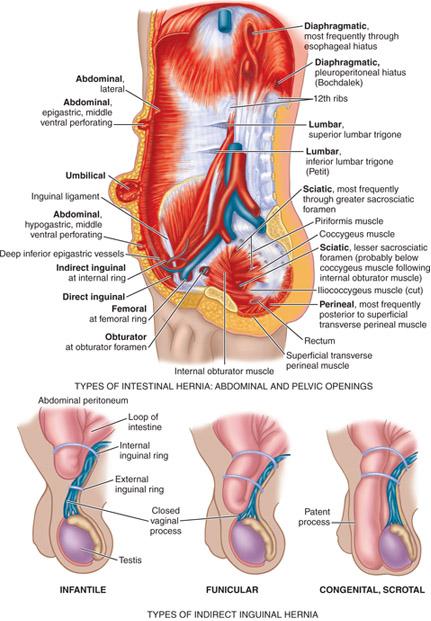
 PLATE 19 INTESTINAL AND INGUINAL HERNIAS
Medical dictionary. 2011.
